SAP Accounts Payable Automation in S/4HANA: End-to-End AP Process Guide
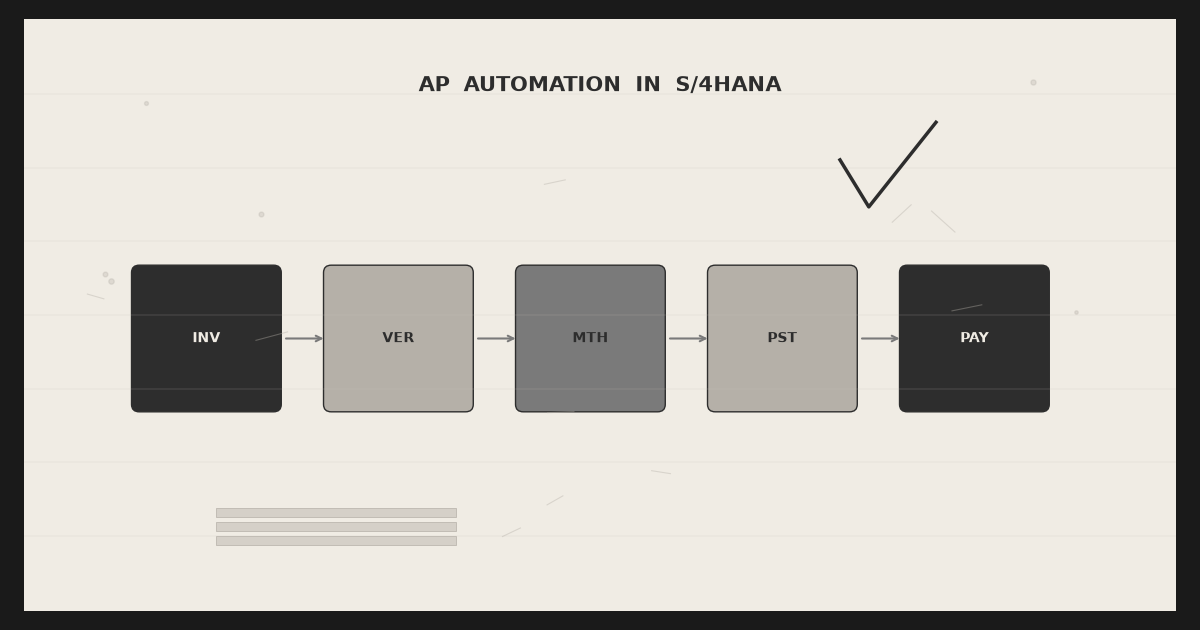
AP automation in SAP S/4HANA spans four layers — document capture (OpenText VIM or native IIM), AI matching and coding, Fiori approval workflows, and exception analytics. The 40-percentage-point gap between industry-average STP (40%) and top-quartile STP (80%+) is a process design gap, not a technology gap. PO invoice mix is the single most important variable determining your STP ceiling. Phased implementation — PO invoices first, non-PO AI coding second, analytics third — delivers consistent results with manageable change burden. Early payment discount capture (2%+ on invoices paid within 10 days) creates a secondary financial return that frequently equals or exceeds headcount savings in the first year.
The industry average for straight-through processing in accounts payable is 40%. The top quartile of S/4HANA AP departments runs at 80%+. The gap between those two numbers is not a technology gap — it is a process design gap.
The organizations stuck at 40% typically implemented the first layer of AP automation — invoice scanning, basic PO matching — and stopped. The organizations running at 80%+ layered all four components: document capture, AI matching, Fiori approval workflows, and exception analytics. The technology required to cross from 40% to 80% is available in S/4HANA today. In many cases, it is already licensed.
This guide covers the architecture, the benchmark data, three production case studies, and the sequencing logic for Finance Directors who want to move their STP rate from industry average to top quartile.
The Four-Layer AP Architecture in S/4HANA
AP automation in S/4HANA is not a single switch. It is a layered architecture, and the decisions made at each layer determine the STP ceiling.
Layer 1: Document Capture and Extraction
The entry point. Invoices arrive by email, EDI, or physical mail. The capture layer extracts header and line-item data — vendor, invoice number, amount, date, tax code, purchase order reference.
OpenText Vendor Invoice Management (VIM) is the market leader here: 50%+ of Fortune 500 SAP customers use it. It handles PDF extraction, validation against SAP master data, and 2-way/3-way PO matching. Pricing: €50-80K initial license plus 18% annual maintenance.
SAP's native Intelligent Invoice Matching (IIM) — included in S/4HANA Cloud at no extra license cost — covers the standard use cases. ML-based matching against purchase orders and goods receipts. Less configurable than OpenText for complex validation rules, but sufficient for mid-market organizations with clean PO processes and standard invoice formats.
Layer 2: AI Matching and Coding
Where the STP rate is primarily determined. PO invoices match automatically when the three-way match validates. Non-PO invoices require AI coding — the system suggests cost center, GL account, and project assignment based on vendor history, line-item descriptions, and prior approval patterns.
The distinction between PO and non-PO invoice volume is the single most important variable in AP automation project design. Retail and manufacturing organizations with high PO discipline (85%+ of invoices with PO) can reach 85%+ STP relatively quickly. Services, healthcare, and construction — where 40-60% of invoices arrive without a PO — face a harder matching challenge and require robust AI coding to close the gap.
Layer 3: Fiori Approval Workflows
Invoice exceptions — matching failures, tolerance violations, coding disputes — enter the Fiori approval workflow. My Inbox consolidates approvals across all AP document types. Configurable rules set amount thresholds, tolerance limits, and escalation paths.
S/4HANA 2025 added parallel approvals, delegation, and mobile approvals. The operational impact of this layer is larger than most AP projects assume: approval cycles are often the primary bottleneck after matching automation is in place. SAP reference data from 2025 shows average approval cycle reduction from 14 days to 3 days when Fiori workflows replace email-based approval chains.
Layer 4: SAP Concur Invoice (T&E Extension)
For organizations with significant travel and expense volume (above €5M per year), SAP Concur Invoice extends AP automation to T&E and non-PO invoice types that fall outside the standard S/4HANA matching scope. AI expense coding, duplicate detection, and policy checks. The integration posts directly to S/4HANA via the SAP Concur connector.
Benchmark Data: What STP Rates Are Realistic
STP rates vary by industry, not because the technology is different, but because invoice type distribution differs. Setting a single corporate STP target without adjusting for invoice mix is a common error.
By industry (2025-2026, APPA Benchmark Study):
Retail and CPG: 75% STP. High PO volumes, standardized formats, established EDI relationships.
Manufacturing: 55% STP. Complex 3-way matching, higher exception rates on goods receipt timing.
Professional services: 35% STP. Non-PO invoices are the majority. AI coding quality determines the ceiling.
Healthcare: 30% STP. Regulatory validation overhead, complex vendor credentialing.
Construction: 25% STP. Project-linked invoices require custom coding logic.
Invoice processing cost per invoice (APPA 2025 Benchmark Study):
Manual processing with no automation: €12-18 per invoice.
OpenText VIM with standard configuration: €1.50-3.00 per invoice.
SAP Intelligent Invoice Matching (Cloud): €2.00-4.00 per invoice.
Full straight-through processing (all layers optimized): €0.80-1.50 per invoice.
The ROI arithmetic is straightforward. A company processing 100,000 invoices per year at €12 per invoice is spending €1.2M annually on AP processing. Moving to full STP at €1.50 per invoice saves €1.05M per year. Implementation cost for a mid-complexity deployment is typically €200-400K. Payback: under 6 months.
Case Study 1: US Manufacturer — OpenText VIM Full Deployment
A US industrial manufacturer with 180,000 invoices per year and 85% PO discipline deployed OpenText VIM across three plants.
Configuration focus: 3-way matching on all PO invoices, tolerance rules by vendor category, Fiori exception workflow with mobile approvals for plant controllers.
Results: invoice processing cost reduced from €12 to €1.80 per invoice. Touchless processing rate: 85%. AP headcount reallocated from invoice processing to vendor management and analytics.
Key success factor: master data cleanup before go-live. The project spent 6 weeks cleaning vendor master data and PO tolerance settings. Teams that skip this step consistently underperform their STP targets in the first 12 months.
Case Study 2: German Manufacturer — Layered Architecture with Dynamic Discounting
A German automotive supplier implemented S/4HANA Intelligent Invoice Matching (cloud) as the matching layer, with Fiori workflows for exception handling, and added SAP's early payment discount functionality in phase 3.
The layered sequencing was deliberate: phase 1 covered PO invoices only (2 months, 60% STP achieved), phase 2 added AI coding for non-PO invoices (2 additional months, 72% STP), phase 3 added analytics and discount optimization (1 month, 80%+ STP sustained).
The unexpected return was in early payment discounts. With 80%+ STP established, the AP team could offer dynamic discounts (2/10 net 30) on auto-approved invoices. Year 1 result: €1.2M in captured early payment discounts that had previously been structurally unavailable because invoice approval cycles were too slow.
The CFO's framing: AP automation shifted from a cost reduction project to a working capital management tool.
Case Study 3: European Retail Group — SAP Native AI, No Third-Party Vendor
A European retail group with 240,000 invoices per year initially planned to procure OpenText VIM. After piloting SAP's Intelligent Invoice Matching for three months, they cancelled the OpenText contract.
The decision logic: 91% of their invoices were standard PO invoices with clean EDI from major suppliers. SAP IIM achieved 78% STP in the pilot. OpenText was projected to add 6-7 percentage points at a cost of €65K license plus ongoing maintenance. The project team concluded the additional STP gain did not justify the license cost or the integration complexity.
Current state: 80% STP on S/4HANA Cloud IIM with zero additional AP automation licenses. The remaining 20% — primarily non-EDI invoices from smaller suppliers — is managed through Fiori exception workflows.
The lesson: OpenText is the right choice for complex validation requirements, multi-entity environments, and volumes above 500,000 invoices per year. Below that threshold, with clean PO processes, SAP native IIM covers the majority of the use case at no incremental license cost.
The Approval Workflow Trap
Most AP automation projects fail to include the approval workflow in scope. The assumption: once matching is automated, approval will follow naturally.
The reality: approval cycles are often the primary bottleneck after matching automation is deployed. A finance team that has reduced invoice matching time from 3 days to 3 minutes but still routes exceptions through email chains with 14-day approval cycles has not solved the AP automation problem — it has moved the bottleneck.
Fiori's My Inbox aggregates all AP approvals with full document context. Amount threshold rules route invoices under €5,000 to line manager approval, under €20,000 to cost center owner, above €20,000 to Finance. Parallel approvals (available in S/4HANA 2025) handle invoices that require sign-off from multiple parties simultaneously rather than sequentially.
The delegation feature is underused and consistently underestimated. Approval workflows that break down during business travel, sick leave, or reorganizations are a leading cause of payment delays and early payment discount forfeiture. S/4HANA 2025's time-based auto-delegation — where the system automatically delegates approvals after 48 hours of inactivity — resolves this operationally without requiring the approver to remember to set a delegate.
The STP Target Methodology
Setting a single corporate STP target is a measurement error. Leading AP departments track STP by invoice type:
PO invoices: target 95%+ (fully matched with no exceptions)
Non-PO invoices: target 60-70% (AI coding covers the majority; complex coding goes to exception)
Credit memos: target 50% (matching against original invoice adds complexity)
Recurring invoices (rent, utilities, subscriptions): target 99% (no matching required; rule-based auto-approval)
Tracking STP by category reveals the specific process design gap. An organization at 55% overall STP may have 90% STP on PO invoices and 15% STP on non-PO invoices — which points directly to the AI coding configuration as the improvement lever, not the matching logic.
The APPA 2025 benchmark provides category-level STP data by industry, which is the relevant comparison baseline. Comparing your overall STP to industry average without adjusting for invoice mix produces misleading conclusions about where the gap actually is.
Implementation Sequencing
The most common implementation failure is deploying all layers simultaneously. The change management burden of simultaneous changes to capture, matching, workflows, and analytics exceeds what most AP teams can absorb while maintaining operational continuity.
The proven sequencing:
Phase 1 (weeks 1-10): PO invoices only. Configure 3-way matching, set tolerance rules, deploy Fiori exception workflow for PO-related exceptions. Target: 60% STP. This phase has the fastest payback and builds team confidence in the new system.
Phase 2 (weeks 11-18): Add non-PO AI coding. Train the model on historical non-PO invoice data. Deploy AI coding suggestions with human review for the first 4-6 weeks to validate accuracy before moving to automated routing. Target: 75% STP.
Phase 3 (weeks 19-22): Exception analytics, STP measurement by category, discount optimization. Close the final STP gap through targeted process improvements in the highest-volume exception categories.
Critical success factor that applies to all three phases: master data quality. Vendor master inconsistencies, missing PO tolerances, and outdated payment terms in SAP are the leading cause of matching failures. A 4-6 week master data cleanup sprint before Phase 1 consistently differentiates high-performing implementations from underperforming ones.
The OpenText vs SAP Native Decision
For Finance Directors with existing OpenText VIM installations, the evaluation question is whether to continue with OpenText or migrate to SAP's native capabilities.
The case for staying on OpenText: you have complex validation requirements, multi-entity environments, or volumes above 500,000 invoices per year where OpenText's pre-built content (50+ country configurations) reduces configuration effort significantly. The customization you have built into OpenText has operational value that would require rebuilding in a migration.
The case for migrating: SAP Intelligent Invoice Matching is included in S/4HANA Cloud at no extra license cost. Customers paying €50-80K per year in OpenText license and maintenance should evaluate whether SAP IIM covers 80%+ of their use cases. The hidden cost of OpenText is not just the license — it is the ongoing maintenance burden of OpenText-specific customizations that require their own upgrade and compatibility testing cycle.
The migration path from OpenText to SAP native is a defined project, not a simple switch. Allow 4-6 months. The primary cost is rebuilding complex validation rules in SAP configuration rather than OpenText configuration. For organizations where OpenText complexity is low, the migration often pays for itself within 18 months of license savings.
The Dynamic Discounting Dimension
AP automation creates a secondary financial return that most implementation business cases exclude: early payment discount capture.
Supplier discount programs (2/10 net 30 — 2% discount for payment within 10 days instead of 30) exist in almost every supplier portfolio. The reason most companies cannot capture these discounts consistently is operational: invoice approval cycles are too slow. A 14-day approval cycle makes 10-day payment terms structurally impossible.
When AP automation reduces the approval cycle to 3 days and STP reaches 70%+, the payment timeline becomes controllable. The decision to pay early becomes a working capital optimization rather than an operational exception.
The German automotive case above — €1.2M in early payment discounts in year 1 — is representative of what 2-3% annual discount rates produce at scale. For a company processing €60M in supplier invoices annually, capturing discounts on 30% of that volume (€18M at 2%) generates €360K in annual return. Against a total implementation cost of €300-400K, the discount capture alone justifies the project — independent of the headcount savings.
Dynamic discounting technology (Taulia, C2FO, and SAP's own early payment program through SAP Business Network) can automate this further: suppliers opt into dynamic discount offers, and the system automatically optimizes payment timing based on available cash and discount rates. This is a layer 5 capability that sits above the four-layer AP architecture — relevant for organizations with significant free cash and supplier portfolios that include SME vendors who value early payment.
Metrics That Matter: What to Track After Go-Live
AP automation implementations that succeed operationally sometimes fail strategically because the measurement framework does not evolve beyond the initial STP metric. The metrics that indicate whether your AP automation is delivering strategic value:
STP rate by invoice type (as described above). The base metric.
Cost per invoice. Total AP department cost (people, technology, overhead) divided by invoices processed. Target: below €3 for cloud IIM implementations, below €2 for full-STP environments.
Days Payable Outstanding (DPO). AP automation should not change your DPO if you are managing to payment terms — but it enables DPO optimization. Organizations that use AP automation to pay consistently at net 30 (rather than the industry average of net 45-50 driven by processing delays) improve supplier relationships and qualify for better discount programs.
Exception rate by vendor. High exception rates for specific vendors indicate a supplier data quality issue — incorrect PO references, non-standard invoice formats, master data mismatches. This is an analytics-driven supplier management opportunity, not just a processing problem.
Approval cycle time by approver. Bottleneck analysis. When approval cycles for specific cost center owners consistently exceed target, the workflow configuration (delegation rules, threshold settings, mobile access) needs adjustment.
Discount capture rate. Of available early payment discounts, what percentage is captured? Below 20% suggests the approval cycle is still the bottleneck. Above 60% indicates the payment optimization loop is functioning.
The Finance-Led vs IT-Led Implementation Distinction
APPA 2025 data shows a 20-30% higher STP rate in Finance-led AP automation implementations versus IT-led implementations. The reason is process design ownership.
IT-led implementations tend to focus on technical integration and system configuration. They deliver a functioning system but often leave process design decisions — tolerance rules, approval thresholds, exception routing — as defaults or generic configurations that do not reflect actual business requirements.
Finance-led implementations make the process design decisions before the system is configured. The AP team defines tolerance rules based on vendor risk profiles. Finance Directors set approval thresholds based on internal controls requirements. Cost center owners design their exception routing based on how they actually operate.
The organizational implication: the AP Director should own the project, with IT in a delivery role. The business process decisions that determine STP rate are Finance decisions, not technology decisions.
What AP Automation Does Not Solve
Three operational problems that AP automation in S/4HANA does not address, and where additional tooling is required:
Supplier master data governance. AP automation depends on clean vendor master data — correct payment terms, bank accounts, tax codes, duplicate vendor records eliminated. This is a prerequisite for automation, not a product of it. Organizations without a vendor master governance process will see AP automation benefits erode as master data quality degrades over time.
Contract-linked invoice validation. For industries where invoices must be validated against underlying contracts (construction, public sector procurement, complex services), SAP's standard matching logic requires supplemental configuration. Contract management systems (SAP CLM or third-party tools like Icertis) feed the invoice validation process — but the integration is not automatic.
Supplier onboarding and self-service. The AP automation stack does not solve the upstream problem of supplier data quality at onboarding. SAP Business Network provides supplier self-service portals for invoice submission and status tracking — but this is an additional deployment, not a built-in feature of the four-layer architecture described above.
The 2026 Starting Point
For Finance Directors beginning an AP automation project in 2026, the context is better than it has ever been:
SAP's native AI matching has matured to the point where OpenText is no longer a prerequisite for mid-market organizations. The decision is now a cost-benefit analysis specific to your invoice mix and complexity, not a default.
Reference case data is extensive — across industries, invoice volumes, and deployment configurations. The benchmark data in this guide is not theoretical; it comes from documented production deployments.
The technology is available today. The gap between 40% and 80% STP is a process design decision, not a technology procurement decision. The organizations still at 40% are not waiting for better tools — they have tools that are already capable of 80% and have not activated them.
The sequencing is proven. A phased approach — PO invoices first, non-PO AI coding second, analytics and optimization third — produces consistent results with manageable change management burden.
The question for Finance Directors in 2026 is not whether AP automation in S/4HANA works. The question is what the cost of the current STP gap is, and whether the activation project is on the roadmap.
For most organizations, the arithmetic is clear before the project starts.
Frequently asked
What straight-through processing rate is realistic for SAP S/4HANA AP automation?
Industry averages in 2025-2026 range from 25% (construction) to 75% (retail and CPG). Top-quartile S/4HANA implementations reach 80%+. The gap is driven by invoice mix — organizations where 85%+ of invoices have a PO reference reach 85%+ STP faster than services or healthcare organizations where 40-60% of invoices arrive without a PO.
OpenText VIM vs SAP Intelligent Invoice Matching — which is right?
For volumes under 500,000 invoices/year with clean PO processes and standard invoice formats, SAP's native IIM (included in S/4HANA Cloud at no extra cost) covers 75-80% STP. OpenText VIM adds 6-7 percentage points in complex multi-entity environments or with non-standard formats, at €50-80K initial license plus 18% annual maintenance. Evaluate whether the STP gain justifies the license cost for your specific invoice mix.
How long does an SAP AP automation implementation take?
A phased implementation takes 19-22 weeks: Phase 1 (PO invoices, Fiori exceptions) — weeks 1-10; Phase 2 (non-PO AI coding) — weeks 11-18; Phase 3 (analytics, discount optimization) — weeks 19-22. A prerequisite master data cleanup sprint of 4-6 weeks before Phase 1 is strongly recommended and consistently differentiates high-performing implementations.
What is the ROI of AP automation in S/4HANA?
A company processing 100,000 invoices/year at €12/invoice (manual) can reach €1.50/invoice at full STP — saving €1.05M/year. Implementation cost for mid-complexity deployments runs €200-400K, yielding a payback period under 6 months. Early payment discount capture adds a secondary return: at 2% discount rates on 30% of €60M in supplier invoices, that is an additional €360K/year.
Need this in your organisation?
I work with a small number of clients each quarter on ERP strategy and IT-department automation. If the questions raised above are live in your team, get in touch.
Start a conversation →