The code monkey trap: what offshore hand-offs broke in IT careers
The offshore hand-off did not just cost money; it structurally turned local senior engineers into reviewers of other people's work, breaking the flow, feedback and cognitive load that good engineering needs. AI can take back the defined grunt work, the boilerplate, tests and documentation, so seniors can design again, but the claim is narrow: the evidence shows AI helps most on routine tasks and can slow experienced people on complex ones. The fix is a workflow redesign, not a tool swap.
The 6 AM call is how I learned to spot the model before I could name it. Somewhere on a SAP program I was running, a developer on the other side of the world had a question about a transport, and the only person who could answer it was asleep in the timezone where the business actually ran. So the call happened at 6 AM, twice a week, and after a while I stopped counting the hours and started noticing what those hours were doing to the people on my side of the line. They were not designing anything anymore. They were reviewing, clarifying, and re-specifying work that had been built to the letter of a spec that was wrong. I have watched good engineers turn into reviewers this way, not through any fault of their own, but through structure. The offshore hand-off did not just cost money. It quietly dismantled the engineering culture of the local team, and most of the people paying for it never saw it happen.
The code monkey trap, from the inside
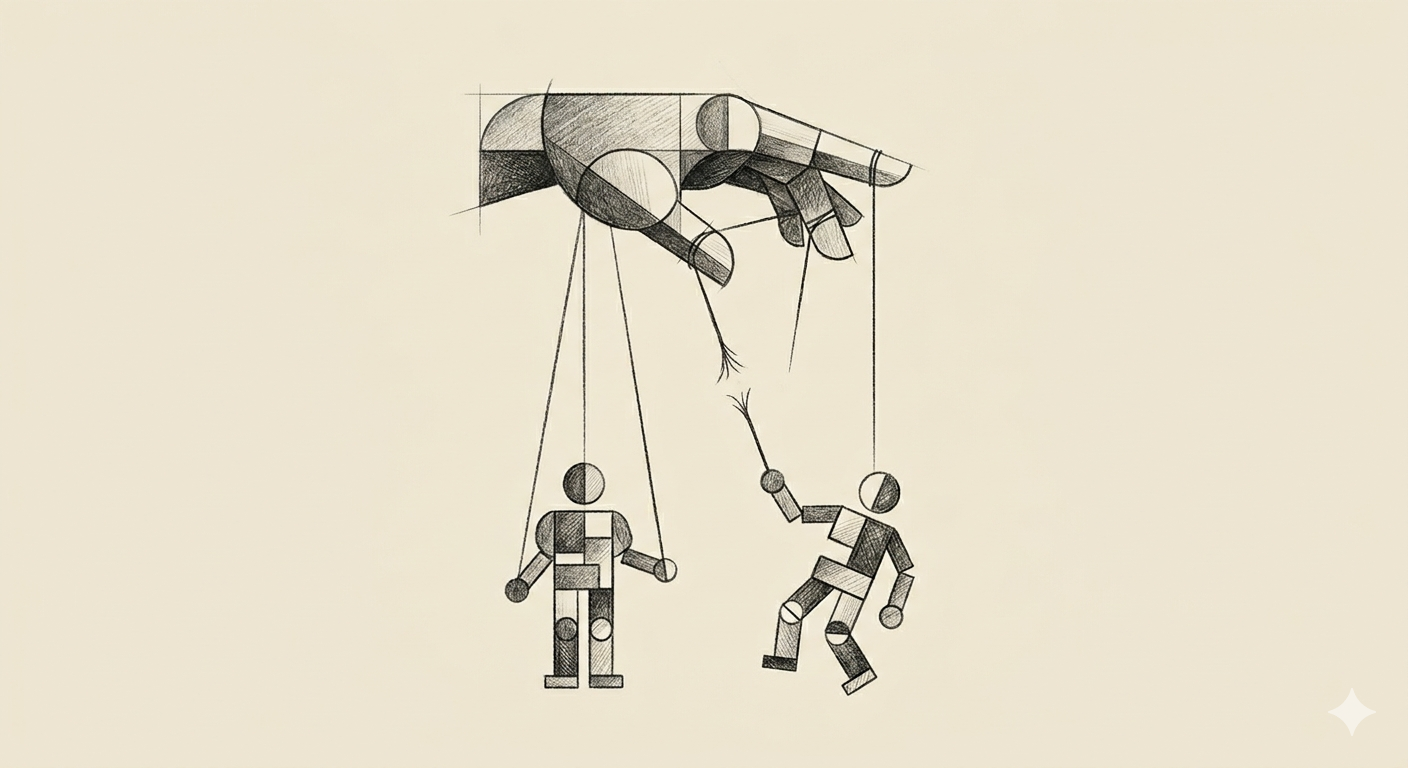 Loss of control — the cut string; when the hand-off rules the work, the senior team loses the design and the business loses the meaning.
The mechanics are always the same, and they are worth naming precisely because they are so ordinary. The business writes a requirement in the afternoon. It is translated into a ticket before the local team leaves, because the offshore team needs a complete spec before their working day starts. The spec is written defensively, to survive twelve time zones without questions, so it is long, rigid, and full of assumptions. The offshore team builds to the letter of it, because the model rewards exactly that. And the code comes back doing what the ticket said and nothing like what the business meant. The senior local developer then spends the day reviewing, correcting, and re-specifying, which is the one job they did not sign up for.
Add the coordination layer on top and the trap closes completely. Status calls at odd hours. Questions that take a day to travel. A review queue that grows faster than the design backlog. I have sat in rooms where the most experienced engineer on the program had not written a line of design in a month, because the entire month went to reconciling the hand-off. That is the definition of a culture problem that looks like a cost problem, which is why it survives every cost review.
I remember one cutover weekend where the pattern became visible in a single night. The transport failed to apply at 2 AM, the offshore team flagged it, and the answer required knowing which plants were affected, which process had been mid-flight, and what the business could tolerate at that hour. None of that was in the ticket. The person who knew it was at home, asleep, and the two hours it took to assemble the context by phone were the most expensive two hours of the month. Nobody billed them as such. They were just the cost of the model, absorbed into everyone's calendar and no one's budget line.
The honest counterpoint matters here, because the engineering sentiment discourse on this topic is real but self-selected. The loudest complaints about offshore-driven review culture come from developers who lived the bad version, and teams with well-run offshore partnerships do not write viral essays about it. Offshore delivery was also a rational answer to a genuine constraint: many organizations could not staff 24/7 support or large program scale onshore at any acceptable cost. The claim is not that offshore is inherently corrupting. The claim is narrower and more defensible: the poorly managed hand-off pattern, the spec-throwing across timezones, breaks the conditions that good engineering needs, and that pattern was the default for a generation of programs.
What the hand-off actually broke
The research on developer experience gives the mechanism a name. The DevEx framework from Microsoft Research and GitHub identifies three pillars of productive engineering work: flow state, fast feedback, and low cognitive load. Read the offshore hand-off against those three and the damage is not mysterious at all. Flow is broken by design, because the response to any question is delayed by a day, so no thread of work ever completes in one sitting. Feedback is slow, because the loop runs across a timezone boundary and a spec intermediary. Cognitive load is high, because the local senior has to hold the business context that the remote team cannot see, for the entire team. The model did not create technical debt by accident. It mirrored an organizational split: the spec-writers here, the implementers there, with a hand-off boundary that structurally prevented the tight, iterative design conversation that good engineering requires.
This is the point most commentary misses, because it is a structural argument and not a productivity one. The offshore model was not merely inefficient at the margin. It was organized in a way that made the local team's best people into processors of other people's work. Fixing that is not a matter of hiring more reviewers. It is a matter of removing the boundary that created the role.
What AI actually changes, stated precisely
Now the part where I have to be careful, because the marketing around AI tools is doing real damage to an otherwise sound argument. The evidence supports a narrow claim, and only the narrow claim survives contact with the research.
AI is very good at the work that offshore hand-offs were built to move: the boilerplate, the routine unit tests, the documentation, the tickets that translate a written spec into code without needing deep business context. The GitHub Copilot randomized controlled trial found developers completed a bounded coding task 55.8 percent faster with the tool, and that is exactly this category of work. Brynjolfsson, Li and Raymond's study of 5,000 customer support agents found generative AI raised productivity by 14 percent on average, with a 34 percent lift for the least experienced workers, the people doing the most routine work. The gains concentrate where the work is defined and the context is thin.
The claim AI makes your senior engineers faster at the hard stuff is not supported, and the counter-evidence is sharp. METR's 2025 study of experienced open-source developers found they were 19 percent slower with AI on complex, familiar codebases, while perceiving a 20 percent speedup. Complex, familiar work, the cutover judgment call, the ambiguous requirement, the architecture decision, is precisely where the tool can slow a senior down while feeling like a win. So the honest statement of the case is this: AI restores craft by removing the low-value grunt work that used to require an offshore hand-off, not by making the craft itself faster. A senior who no longer reviews twenty routine tickets a day can spend that day designing, and the design work itself remains human work.
The caveat most takes skip
Here is the uncomfortable part that the culture-focused takes rarely include, and it is the reason I am cautious about anyone who sells AI as the fix for a broken team. AI does not automatically fix a broken culture. A team that was dysfunctional with offshore ticket-throwing can become dysfunctional in a new way with AI-generated code, and the failure mode is eerily similar. Reviewing AI output for correctness, security, and architectural fit is its own cognitive load, and it can reproduce the exact complaint this article levels at offshore: developers as reviewers and processors, not designers. I have seen the pattern start already, the review queue growing back, the design backlog shrinking again, with a different tool at the top of the pipeline.
The fix is organizational, not technological. Removing the hand-off only helps if the workflow is redesigned around it: what gets delegated to the tool, what stays with the human, and how the boundary between the two is reviewed. A team that does that redesign will feel the difference within a quarter. A team that simply swaps the tool in will rediscover the trap with better graphics.
The senior who designs again
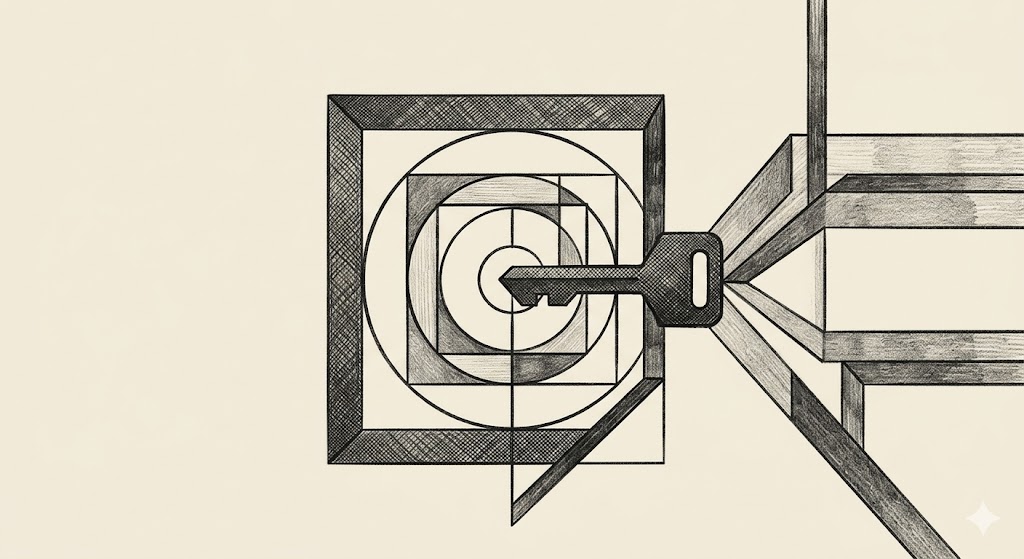 Ownership — the senior engineer reclaims the design; the fix for the trap is restoring the designing role, not adding more review.
The image I keep coming back to is a small one. A senior developer ends a day having designed, not reviewed. The boilerplate went to the tool overnight, the routine tickets never reached the review queue, and the hours that used to vanish into the hand-off went into the conversation with the business about what the system should do. That is the craft argument made concrete: not faster everything, not a romantic return to some 1990s in-house ideal, just the quiet restoration of the work that senior engineers were hired to do.
If your team has been living the 6 AM call, you already know which of these paragraphs describes your program. The tool is not the hard part, and neither is the technology. The hard part is admitting that the delivery model you inherited shaped your engineers into reviewers, and then deciding, deliberately, to redesign the workflow so they can be designers again. You are allowed to make that decision. It is the one thing the market will not do for you.
Sources
- Peng, Kalliamvakou, Cihon and Demirer (2023), GitHub Copilot randomized controlled trial - https://arxiv.org/abs/2302.06590
- METR (2025), Measuring the Impact of Early-2025 AI on Experienced Open-Source Developer Productivity - https://metr.org/blog/2025-07-10-early-2025-ai-experienced-os-dev-study/
- Brynjolfsson, Li and Raymond (2023), Generative AI at Work (NBER w31161) - https://www.nber.org/papers/w31161
- Forsgren, Storey, Maddila, Zimmermann, Houck and Butler (2023), DevEx: What Actually Drives Productivity, ACM Queue - https://dl.acm.org/doi/10.1145/3595878
- Stack Overflow Developer Survey 2024 - https://survey.stackoverflow.co/2024/
Frequently asked
How did the offshore hand-off break engineering culture?
The spec-throwing hand-off across timezones turned local seniors into reviewers: flow is broken by the day-long response loop, feedback is slow across the timezone boundary, and cognitive load is high because the senior holds the business context the remote team cannot see. The model was organized in a way that made the local team's best people into processors of other people's work.
Does AI actually make senior engineers faster?
Only on defined, routine work. The GitHub Copilot trial found developers completed a bounded coding task 55.8 percent faster, and Brynjolfsson's support-agent study found a 14 percent average lift. But METR's 2025 study found experienced developers were 19 percent slower with AI on complex, familiar codebases. AI restores craft by removing grunt work, not by making the craft itself faster.
What fixes the code monkey trap?
A workflow redesign, not a tool swap: what gets delegated to the tool, what stays with the human, and how the boundary between the two is reviewed. Removing the hand-off only helps if the workflow is redesigned around it; a team that simply swaps the tool in rediscovers the trap with better graphics.
Need this in your organisation?
I work with a small number of clients each quarter on ERP strategy and IT-department automation. If the questions raised above are live in your team, get in touch.
Start a conversation →